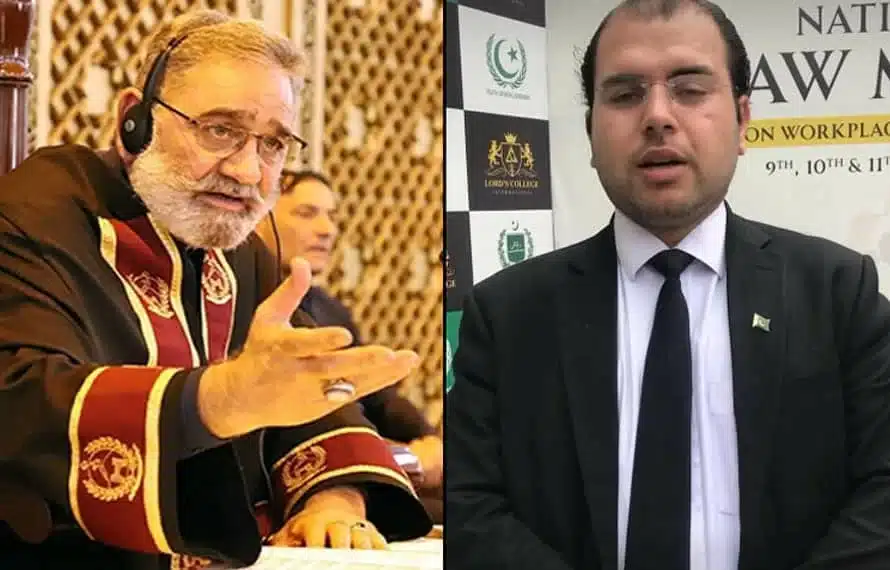
Khyber Pakhtunkhwa Assembly Speaker Babar Saleem Swati has received a legal notice demanding Rs 100 million from former Assembly Advisor Ali Azeem Afridi. Afridi alleges serious defamation against the speaker, claiming that recent statements have severely harmed his personal and professional reputation.
According to a report from the private TV channel Aaj News, the legal notice asserts that the press release issued by the speaker contained baseless and misleading allegations against Afridi. These accusations include claims that Afridi worked for the former government, was involved in political activities, and resigned from his position as legal assistant to the assembly under pressure. Afridi contends that he resigned voluntarily, not due to any external pressures, whether political or otherwise.
The notice further states that the Speaker’s comments not only raise questions about Afridi’s professional standing but have also negatively impacted his career. Additionally, a separate legal notice for Rs 100 million has been sent to the Speaker’s press secretary, labeling the press release as malicious and an act of character assassination.
Sources indicate that if Speaker Swati and his spokesperson fail to respond appropriately to the legal notice, Afridi may proceed with legal action.
Read also: KP Adviser Barrister Saif dismisses internal rifts with PTI founder
The Bus Rapid Transit (BRT) service in Peshawar has officially implemented increased fares starting today, drawing concern and criticism from passengers.
Under the new pricing, the fare for every five-kilometre journey has been raised from Rs 20 to Rs 30. Meanwhile, the maximum fare for a full 40-kilometre ride has gone up from Rs 60 to Rs 70. A single-ride ticket, which previously cost Rs 60, will now also cost Rs 70. The fare hike follows a notification issued by the Khyber Pakhtunkhwa Urban Mobility Authority on June 16, citing rising inflation as the main reason behind the decision. A statement from the Transport Department confirmed that the fare per stop has increased by Rs 10.
However, many commuters have expressed frustration, saying the move adds to the financial strain already caused by increasing fuel and food prices. “They were supposed to give us relief. Instead, they’re adding more pressure on the common man,” said one daily passenger. As prices rise across the board, many are now questioning whether essential services like public transport should be made more expensive, especially when the service is often promoted as a budget-friendly alternative for the public.